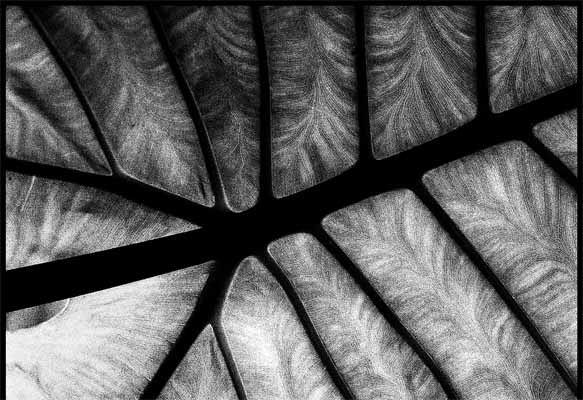
On the occasion of my birthday (20. of february) I would like to surprise you with an article about me which is very kind to me. It was written by my favourite poet Zemlényi Attila the editor in chief of the periodical titled "Műút". The article was published at one time in the columns of "Irodalmi Jelen".
Silence Alive
To the photos of Bozsaky Dávid
If I were asked I would reply without hesitation that Bozsaky Dávid took these photos by his single camera in the outskirts of the shooting lodge in Ilmenau where Goethe wrote the Wanderer's night song on the wall. In a place where under the power of poetry - as Gandalf disarmingly tells- death is not the end of life but is another path. It is in a place where temporariness of life is followed by the act of adapting to the harmony of nature and to the order of eternal roundabout. You are not alone over there. Revelation is a painful act though. These legendary black and white creatures are observing and the shepherd is the forest. Deepness - sharpness. It makes the thought of Nietscshe trivial that whatever you look at it looks back at you. The glance of Bozsaky Dávid means the same to me. Reflection is its essence. There is no hanky-panky, coloured-fragrant, sugar-coated illusion imitating perfection. There are only emotionless, persistently observing microcosmoses with sharp, dashed, scalloped and organic middles and with dimmed edges. There are them and the wanderer.
Goethe's Wanderer's Night song in Henry Wadsworth Longfellow's Translation:
O'er all the hill-tops
Is quiet now,
In all the tree-tops
Hearest thou
Hardly a breath;
The birds are asleep in the trees:
Wait; soon like these
Thou too shalt rest.
Showing posts with label art philosophy. Show all posts
Showing posts with label art philosophy. Show all posts
5/07/2010

5/04/2010
Haunted by a face, or the mystery of eternal self-portraits
According to certain views of art history the artist at the beginning of his career, until he lacks his own evolved style, can only paint or draw himself instead of drawing portraits on others. According to other views this remains so during the whole artistic career as the artist gets his own character involuntarily into the completed artwork. It is like transmitting our DNS in a logic way on a piece of paper by means of a pen or a brush in our hands. Would a genetic relationship come into existence between the artist and the artwork? All right, let's try to decode this! The idiosyncrasy of certain components (e.g. handling the brush, conducting lines, the resources of motives) assimilates the completed artworks too. As far as here it does not sound strange as each artist has his own style. But what is the artist as a biological being? It would be an obvious explanation that our drawings resemble what we see the most in life. We see ourselves the least and only from a mirror which has the disadvantage of providing an inverse image but always from one viewpoint. Therefore painting our own selves always originates from an ancient, instinctive and subconscious skill, or if you like, it is part of our supernatural talent. Sure enough that there is no scientific answer for the question of eternal self-portraits mystery, moreover there is such a vagueness that nobody can give an answer whether which academic area will support this theory by further facts. Will it be psychology, genetics or ethology? One thing is sure that till then art history will be emitting further evidence of the mystery. However I truly don't understand how experienced professionals could nowadays be in fever apropos of the disputatious Mona Lisa misery. Let me illustrate my short conception again with the art works of Téglás István. If you do not know him and would like to get to know who should the exhibited statues and paintings resemble than visit http://www.teglasistvan.blogspot.com and watch him in the movie titled "Pear wood Hero".
3/31/2010
The secrets of driftwoods
Wood is a precious thing worth having in Africa. The locals mass at the shore as soon as the high tide withdrews to collect the gift of the ocean. The largest pieces of wood are sawn on the spot and carried home by wheel barrows. The nomadic sculptors of the Sahara mostly hunt for the fragrant thuya roots or for acacia wood. Acacia is a Genus of shrubs and tree belonging to the family of Magnoliopsida to the order of Fabales and to the Subfamily Mimosoideae of the family Fabaceae. It originally has bright colour and as the effect of the ocean and the sunshine it quickly becomes dark brown or almost black. It could be slightly distinguished from ebony wood. Thuya has been used for fuming during sacrificial or other ritual ceremonies beyond memory. Its name also originates from the Greek "thero" which means to sacrifice. The thuya root of the nomadic sculptors is not only used for its long lasting fragrance but also for its beautiful burr. The shiny, glittering surface is not the result of varnishing. A piece of cloth is soaked with pure alcohol and a pebble is covered by this cloth. The surface of the wood is rubbed with it until the desired effect is reached. The statue of Téglás István titled "The Redish Design Face" was made of Moroccon acacia wood.
2/24/2010
A real tribal artist
István's artistic career is exemplary by all means; nevertheless it is not an ordinary career. I first met him at the age of twenty. I got excited when I got to know that he manages a tattoo shop. At that time I attended the third year at the Faculty of Art History at the Miskolc University . I also attended the Cultural Anthropology lessons of Lajos Boglár. I visited the most important galleries and museums of Europe and I was aware of the fact that I was mostly interested in tribal art. But I did not expect to meet a "real tribal artist" three blocks away from my flat in my own hometown. At that time during the middle of the 90s my flat reflected my bohemian lifestyle. Bors Laca, the drummer of Westmister Apu and Mo bands, used to live in the other room with his girlfriend. The guitar player Gerenécs Karesz used to sleep there too if he had missed the bus. We were friendly disposed during the nights, so I searched for my pigmy tape and we amused the retired residents of the dwelling-house with my own hand crafted drums, cow horn rattles and my long flute. Huxi regularly dropped by with his guitar. Györkös Máriusz also appeared and Cselák too who wrote the "Bitter sugar" album for the Auróra band. That year I had an exhibition named Trunk Tribe. I Invited from Miskolc two of my poet genious István Béki and Attila Zemlényi. Their performance, titled the "The identity card picture of the false dead" shocked the audience of the vernissage. It was a good feeling that I could also go somewhere instead of everyone visiting me. We sat around the tattoo chair in István's shop and we listened to free jazz music. He offered me Lark's Tongue in Aspic by King Crimson I gave him the free music of Hermeto Pascoal. When we became inspired we painted everything including the doors and the furniture. We worked on each other's paintings. We did not call it my work or your work as everything was collective. It was more than a friendship; we became brothers.
Subscribe to:
Posts (Atom)